

Choosing plates, bowls, cups and cutlery may seem like a simple purchasing decision. But when these products are used every day by restaurants, cafés, cloud kitchens, caterers, offices and households, the material they are made from can have a much larger significance.
This is where sustainable tableware comes in.
But what exactly does sustainable tableware mean? Is every product labelled “eco-friendly” genuinely sustainable? Are bagasse plates better than plastic? What about areca palm leaf plates? And what should a restaurant or consumer actually look for before making a purchase?
This beginner’s guide explains the fundamentals so you can make more informed choices without relying on vague environmental claims.
What Is Sustainable Tableware?
Sustainable tableware refers to food-service plates, bowls, cups, trays, cutlery and related products designed with greater consideration for material sourcing, product use and end-of-life impacts than conventional disposable alternatives.
The important point is that “sustainable” is not simply a material name.
A tableware product needs to be considered in context. Its raw material, manufacturing process, durability, intended use, packaging, transportation and disposal route can all influence its overall environmental profile.
For example, replacing a conventional disposable product with one made from a renewable or agricultural by-product may offer advantages in some circumstances. However, that does not automatically mean the product has zero environmental impact.
A responsible approach is therefore to ask:
- What is the product made from?
- Where does the raw material come from?
- Is it designed for its intended food-service application?
- How durable and functional is it?
- What happens after use?
- Are sustainability claims supported by appropriate evidence?
- Can the product realistically be managed through the waste systems available in the intended location?
This broader perspective is particularly important for businesses making large-volume purchases.
[Internal Link: Sustainable Tableware: Materials, Benefits and Buying Guide]
Why Is Sustainable Tableware Becoming More Important?
Disposable food-service products are used across a huge range of situations—from a quick takeaway lunch to large weddings, corporate events and restaurant deliveries.
In India, businesses also operate within a changing regulatory and consumer environment around plastic waste. The Central Pollution Control Board lists several identified single-use plastic items, including plastic plates, cups, glasses, cutlery and trays, as prohibited from July 1, 2022.
This does not mean that every alternative material is automatically sustainable. Instead, it highlights why food businesses need to understand the differences between materials and select products appropriate for their use.
For a restaurant or cloud kitchen, sustainable tableware can become part of a wider effort to improve purchasing decisions, reduce reliance on certain conventional disposable materials and communicate a more considered approach to customers.
What Materials Are Used in Sustainable Tableware?
There is no single material that defines sustainable tableware.
Different products use different materials, and each comes with its own characteristics, advantages and limitations.
1. Bagasse Tableware
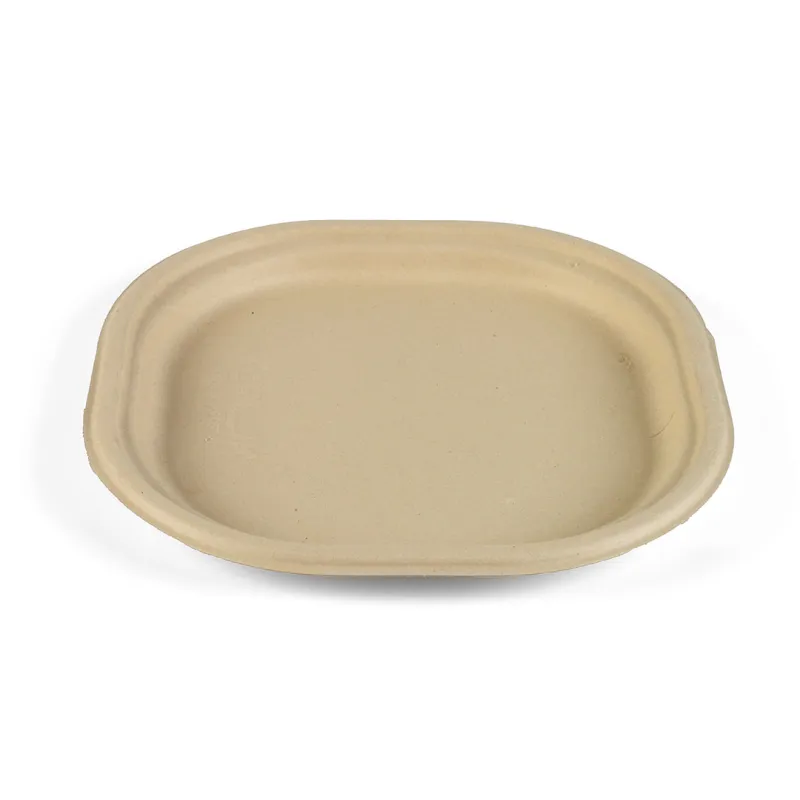
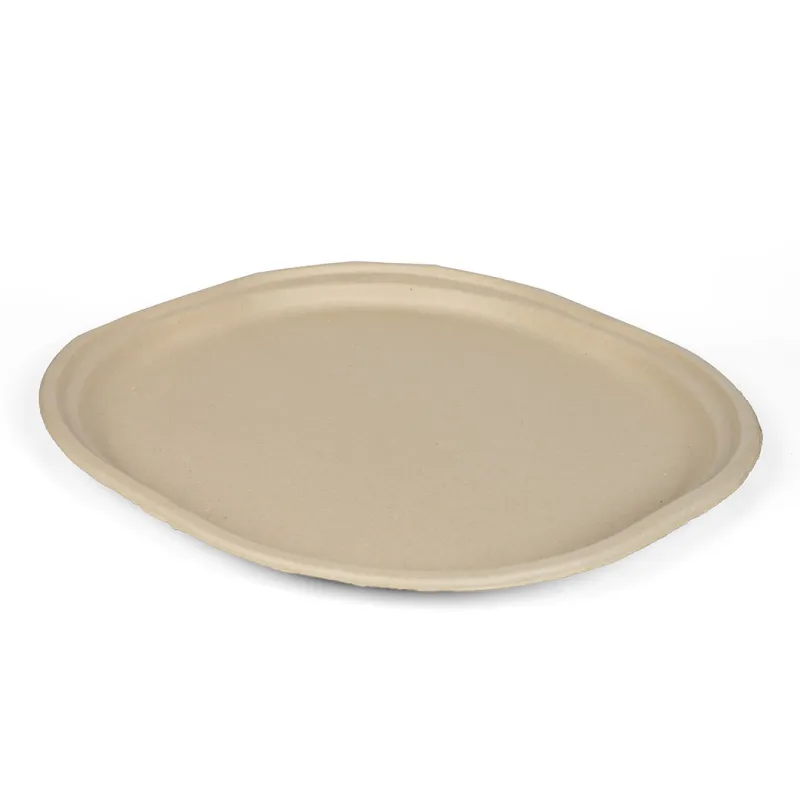
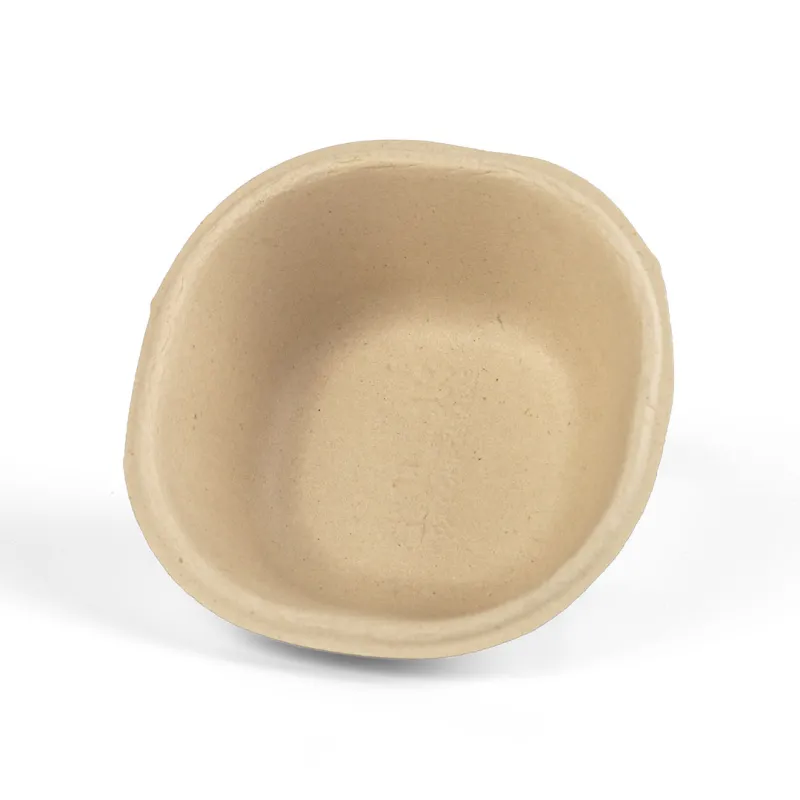
Bagasse is the fibrous material left after sugarcane juice has been extracted. It can be processed into moulded food-service products such as plates, bowls, trays and containers.
One of the reasons bagasse is widely used in alternative food-service tableware is that it makes use of an agricultural processing residue rather than requiring the product itself to be made from conventional petroleum-based plastic.
Bagasse products can also be manufactured in a variety of shapes and sizes, making them suitable for applications ranging from everyday takeaway meals to catering.
However, buyers should not assume that every bagasse product has identical properties. Performance depends on manufacturing quality, product design and intended application.
Claims such as “compostable” should also be understood in relation to the relevant product specification and actual waste-management conditions rather than treated as a guarantee that the product will disappear anywhere it is thrown.
[Internal Link: What Is Bagasse? How Sugarcane Fibre Becomes Tableware]
2. Areca Palm Leaf Tableware
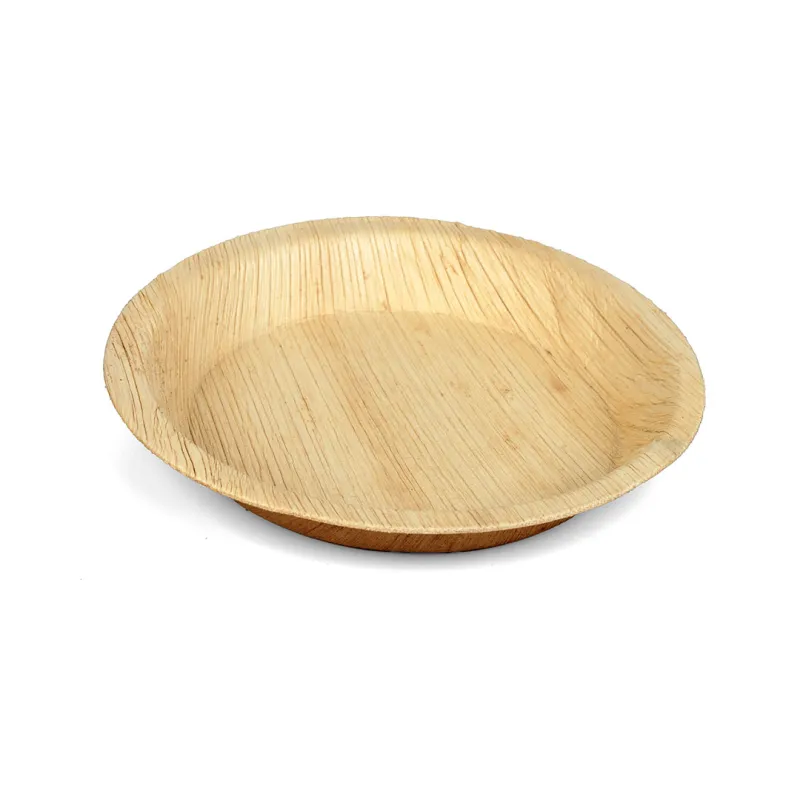
Areca palm leaf tableware is made from naturally fallen areca palm leaf sheaths that are collected, cleaned, processed and moulded into food-service products.
This material is particularly recognisable for its natural appearance and textured surface.
Areca palm leaf plates can work well for:
- Weddings and celebrations
- Catering events
- Outdoor meals
- Premium food presentation
- Traditional Indian food
- Restaurant and buffet service
One of its distinctive advantages is aesthetics. The natural appearance can make a simple meal feel more premium without requiring elaborate decoration.
As with any material, however, product quality matters. Thickness, moulding quality, finish and manufacturing standards can affect the user experience.
[Internal Link: Areca Palm Leaf Plates: What You Should Know Before Buying]
3. Paper and Board
Paper-based tableware is another common alternative, particularly for cups, plates, food containers and takeaway applications.
Paper products can vary considerably depending on their construction and any coatings or treatments used.
This is why simply seeing the word “paper” does not tell a buyer everything they need to know about a product's environmental or functional performance.
For food businesses, the intended application is especially important. A product designed for dry snacks may not be appropriate for a hot, oily or liquid-heavy meal.
4. Reusable Tableware
Sustainable tableware does not always mean disposable tableware.
Reusable stainless steel, glass, ceramic and other durable products can be highly appropriate when washing, storage, transport and repeated use are practical.
For example, a dine-in restaurant may have little reason to replace reusable crockery with disposable alternatives. On the other hand, a large outdoor event may face very different operational constraints.
The most sustainable option is therefore often application-dependent.
Sustainable Tableware vs Disposable Plastic: What Is the Difference?
It is tempting to simplify the comparison into “plastic is bad and sustainable tableware is good.” Real-world purchasing decisions are more complicated.
Conventional disposable plastic can provide useful properties such as low weight, durability and moisture resistance. Its major challenge in many food-service applications is its dependence on fossil-based plastic materials and the waste-management issues associated with disposable products.
Alternative tableware materials may offer different advantages, but they also have limitations.
A better comparison looks at several factors:
FactorQuestions to AskMaterialWhat is the product actually made from?FunctionCan it handle the food and serving conditions?DurabilityWill it perform reliably during intended use?SourcingIs the raw material responsibly sourced or recovered?End of lifeWhat disposal or recovery options are realistically available?ClaimsCan environmental claims be substantiated?PackagingIs unnecessary secondary packaging being avoided?Business fitDoes it work economically and operationally for the business?
This approach helps prevent one-dimensional sustainability decisions.
Is Sustainable Tableware Safe for Food?
Food safety should always come before environmental positioning.
A sustainable material is not automatically suitable for every food application simply because its raw material is natural or renewable.
Food businesses should purchase tableware intended for food contact and obtain appropriate product information from suppliers. FSSAI maintains regulations covering food safety and packaging, and its guidance for food-service establishments specifically addresses the use of safe and suitable food packaging materials.
Businesses should therefore ask suppliers for relevant specifications and documentation rather than relying only on words such as “natural,” “eco-friendly” or “biodegradable.”
This is particularly important when serving:
- Hot food
- Oily or greasy food
- Gravies and curries
- Desserts
- Acidic foods
- Food intended for extended holding or delivery
Product suitability should always be confirmed for the actual intended use.
What Does “Biodegradable” or “Compostable” Mean?
These terms are often used interchangeably in casual marketing, but they should not be treated as identical.
Biodegradable generally refers to the ability of a material to break down through biological processes under suitable conditions.
Compostable refers to a more specific set of conditions and requirements for breaking down into compost-related outputs within an appropriate composting environment.
The practical issue for consumers is that disposal conditions matter.
A product described as compostable does not necessarily mean it will rapidly break down in every landfill, roadside environment, household bin or open area.
Therefore, when evaluating a sustainability claim, ask:
- What exactly is being claimed?
- Is there supporting certification or documentation where applicable?
- Under what conditions does the claimed process occur?
- Is that disposal infrastructure actually available to the intended user?
This is a much more reliable way to evaluate environmental claims than choosing products based solely on a green label.
How Can Restaurants Choose Sustainable Tableware?
For a restaurant, cloud kitchen or catering business, the right choice should balance sustainability, food safety, functionality, customer experience and cost.
Start by identifying the actual use case.
A cloud kitchen delivering biryani needs different packaging performance from a café serving dry bakery items. A wedding caterer has different requirements from an office pantry.
Consider these questions before placing a bulk order:
Match the product to the food
Think about portion size, temperature, moisture, oil, gravy and holding time.
Check product specifications
Ask suppliers about dimensions, thickness, intended food applications and relevant compliance documentation.
Evaluate the supplier
A responsible supplier should be able to clearly explain what its products are made from and provide appropriate product information rather than relying entirely on marketing language.
Test before buying in bulk
Order samples and test them with the actual meals you serve.
Consider the complete operating process
Look beyond the plate itself. Examine packaging, storage requirements, transportation, breakage or damage rates and disposal practices.
[Internal Link: How Restaurants Can Switch to Sustainable Tableware]
How Can Consumers Choose Better Tableware?
Consumers do not need to become sustainability experts to make better choices.
A simple checklist can help:
- Look beyond the word “eco-friendly.”
- Check the material.
- Consider whether the product suits the food being served.
- Avoid unnecessary over-packaging.
- Look for credible product information.
- Understand what disposal options are realistically available.
- Prefer suppliers that are transparent about their materials and claims.
The goal is not to find a supposedly “perfect” product. It is to make a better-informed choice for the particular situation.
Is Sustainable Tableware Always the Best Choice?
Not necessarily.
This is an important distinction.
If a restaurant already has an effective reusable crockery system for dine-in service, replacing it with disposable tableware simply because the disposable product is marketed as sustainable may not make operational sense.
Similarly, choosing an alternative material that cannot handle the intended food can lead to leakage, product failure, food waste and customer dissatisfaction.
Sustainability should therefore be treated as a decision framework, not a marketing label.
The strongest approach considers the complete use cycle: material → manufacturing → transportation → use → disposal or recovery.
The Future of Food-Service Tableware
The shift toward more responsible tableware is not simply about replacing one plate with another.
It is about encouraging consumers and food businesses to ask better questions about the materials they use every day.
For India’s growing restaurant, catering, takeaway and delivery sectors, that means considering alternatives carefully while keeping food safety, performance and practical waste management at the centre of the decision.
At CaneServe, we believe understanding the material is the first step toward making a better tableware choice. Bagasse, areca palm leaf and other alternative materials each have their own characteristics, and the right solution depends on how and where the product will be used.
Sustainable tableware is not about claiming that one material solves every environmental problem.
It is about making informed, responsible choices—one food-service product at a time.